

How Modular Micro-Design is Redefining Contemporary Interiors.
In today’s interior design landscape, square footage is no longer the ultimate luxury. The real architectural challenge lies in spatial adaptability. High-end residential projects now demand environments that can evolve.
In this context, design cannot be merely aesthetic. It must be a functional tool.
Is the wall a constraint? Or could it be the solution to your space challenges?
Often viewed as a simple vertical limit, the wall is actually the most valuable surface for space optimization. “Smart” design means moving away from bulky storage units and embracing design by subtraction.
The use of modular systems, including adhesive and magnetic solutions, clears the floor plane, instantly increasing the perceived volume of a room. A single, strategically placed element can fulfill the function of an entire piece of furniture without occupying the same footprint.
Why settle for fixed accessories when a project can evolve?
Traditionally, bathroom accessories were the final, static compromise of a construction site. Designing with modularity means treating the bathroom as an open system.
- Ergonomic Adaptability: The ability to position magnetic elements or equipped rails allows the space to be tailored to the user’s exact measurements, moving beyond rigid standards to meet changing needs.
- Functional Evolution: A support located by the vanity today can be moved to the shower or the toilet area tomorrow, following shifting habits without the need to drill into new tiles.
- Technical Integration: Smart design doesn’t just “sit” on top of a project; it integrates with the materials, respecting the architectural proportions defined by the designer.
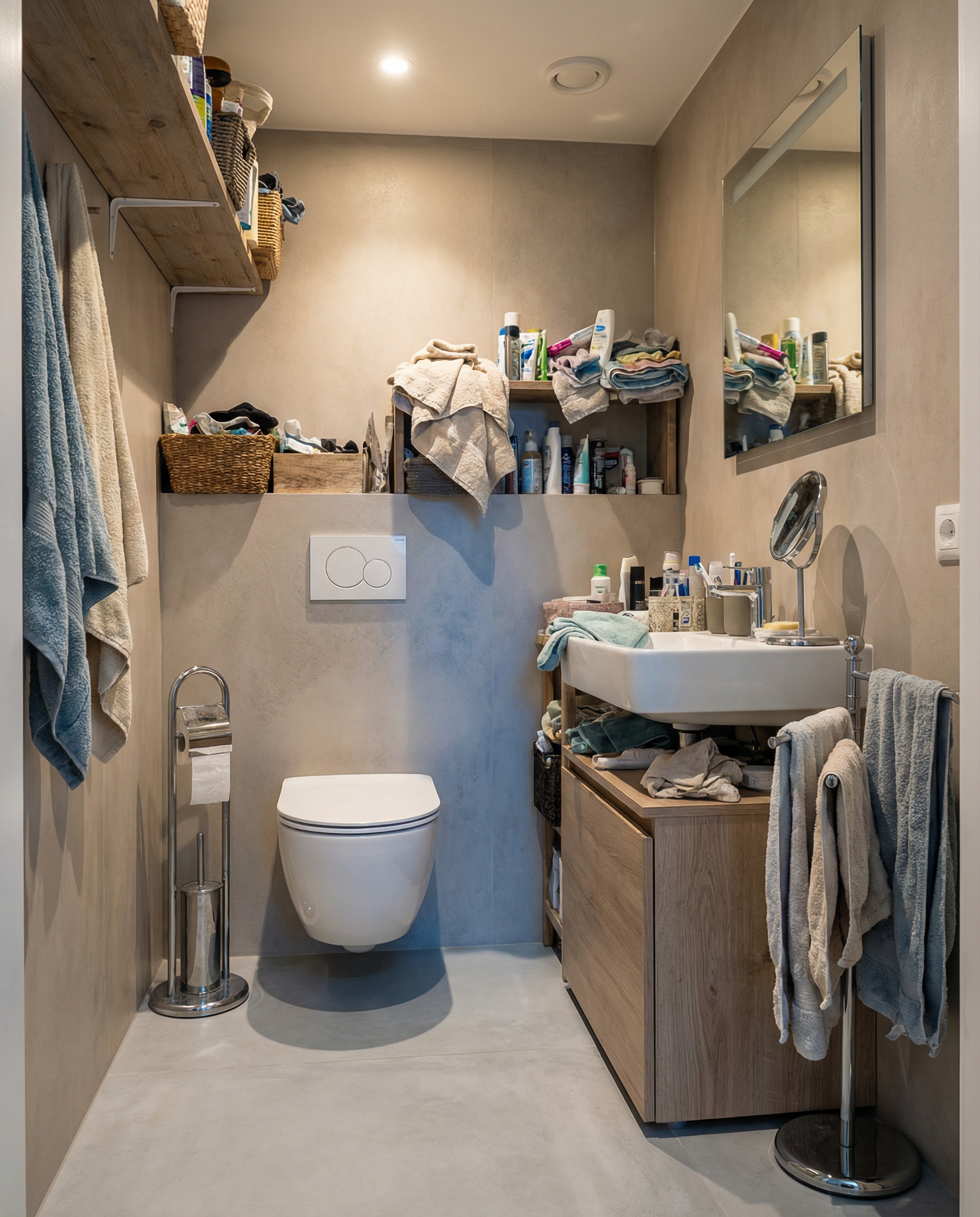
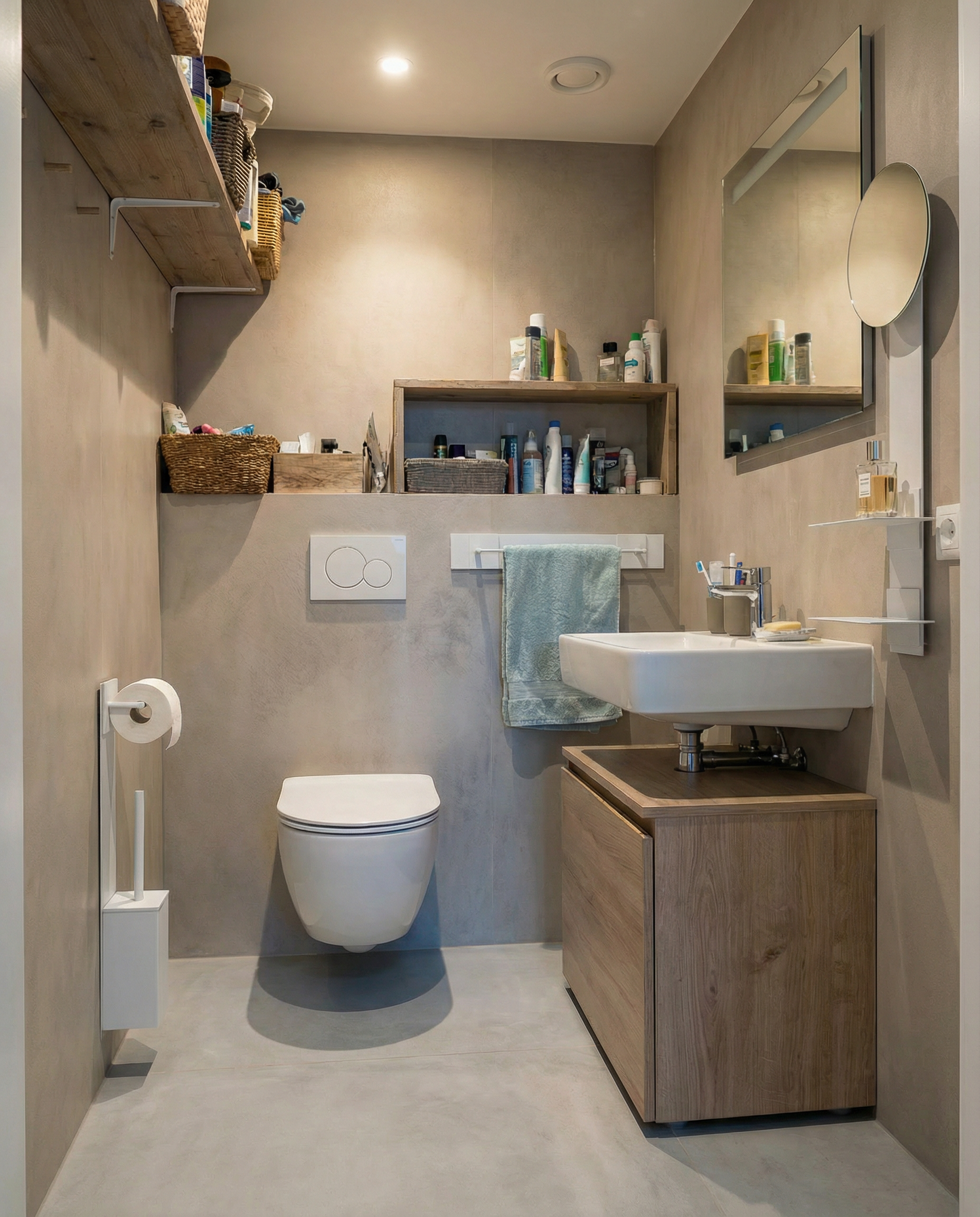
How do you turn a technical constraint into a design opportunity?
Construction sites often present “dead zones”: a shower niche that’s too narrow, a plumbing ledge that blocks standard furniture, or the need for a seamless, minimalist vanity line. The correct approach isn’t to “fill” the space, but to “accessorize with intention.”
A magnetic system is no longer just a shelf or a hook; it becomes a creative infrastructure in the architect’s hands. It organizes daily clutter while maintaining the formal rigor required for high-end projects.
Final Takeaways for the Designer
Choosing tangible solutions means opting for objects that don’t impose a single function, but leave room for professional interpretation. True essential design is what “disappears” after installation, allowing the architecture and the purity of materials to take center stage.
Design should never add visual noise; it should solve architectural silences.